
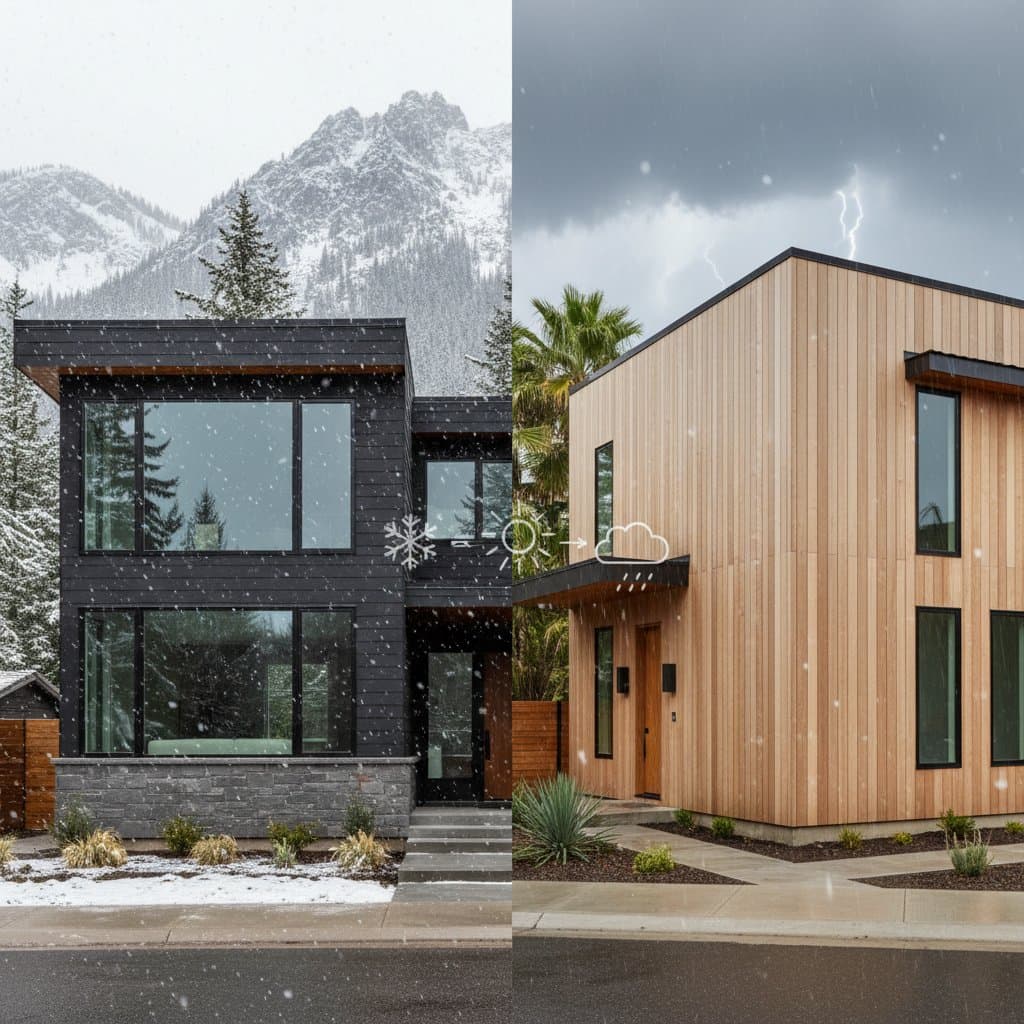
Selecting Siding Tailored to Your Local Climate
Choosing siding that aligns with your area's weather patterns safeguards your home's structure and maintains its market value over time. Materials designed to withstand local moisture, high winds, and temperature fluctuations minimize the need for frequent repairs and enhance appeal to potential buyers. This guide details how climate influences siding choices, explores associated costs and returns, and outlines practical steps for selection, design, and upkeep to achieve lasting performance.
Evaluating Costs, Returns, and Key Influences
Siding serves as both a barrier against the elements and a key element of your home's exterior aesthetic. Its impact on property value stems from lower ongoing maintenance demands, potential energy savings through better insulation, and refreshed visual appeal. Returns on investment generally fall between 60 and 85 percent, varying by material, installation quality, and regional real estate trends.
Factors Driving Installation Costs
-
Old Siding Removal and Disposal: Removing existing layers costs between one and three dollars per square foot. Handling hazardous materials like asbestos or lead increases expenses due to specialized disposal requirements.
-
Project Complexity: Architectural features such as gables, dormers, and intricate trim extend labor time and raise overall costs.
-
Home Height and Site Accessibility: Working on multi-story structures or sloped terrain necessitates scaffolding or lifts, which add to labor and equipment charges.
-
Extent of Trim and Flashing: Additional corners, window surrounds, and door frames demand more materials and time for proper sealing.
-
Local Labor Variations: Rates in coastal or metropolitan regions typically exceed those in rural areas by 10 to 20 percent.
Project Size Illustrations
-
Compact Scope: For a 1,200-square-foot single-story residence using vinyl or engineered wood siding, expect total costs of 12,000 to 20,000 dollars.
-
Moderate Scope: A 2,000-square-foot home fitted with fiber cement siding ranges from 20,000 to 35,000 dollars.
-
Extensive Scope: Installing stone veneer or high-end composite on a 3,500-square-foot property often totals 45,000 to 80,000 dollars.
Plan your investment based on your intended occupancy duration. For homeowners anticipating a move within ten years, select mid-tier options that offer strong visual impact and low maintenance needs.
Enhancing Curb Appeal Through Thoughtful Design
Strategic siding design elevates your home's exterior presence, creating an impression of quality and care from the street view. Focus on achieving harmonious proportions, streamlined detailing, and hues that harmonize with surrounding light conditions to maximize buyer interest.
Balancing Form, Contrast, and Scale
Align siding patterns with your home's architecture for optimal effect. Vertical paneling elongates the appearance of low-profile homes, while horizontal lap siding provides stability to taller facades. Maintain uniform trim widths at corners to foster a sense of cohesion, and opt for broader boards on expansive walls to simplify the visual field.
Selecting Colors and Finishes
In regions with diffused northern or coastal light, neutral grays or subtle blues complement the environment. Sunnier climates pair well with warm beiges or earth tones. Always evaluate sample boards in various daylight conditions to confirm suitability, and choose matte surfaces to mask minor imperfections more effectively than high-gloss alternatives.
Focusing on Entryways and Accents
Draw attention to the front entrance to strengthen first impressions and photography outcomes. Apply contrasting tones around doors for definition, position house numbers for clear street-level visibility, and install lighting that provides balanced glow without harsh shadows. Limit ornamental elements to prevent moisture accumulation in crevices.
Curb appeal arises from precise proportions and visible attention to detail, beyond mere coloration. A tidy, illuminated facade conveys reliability and diligent property management.
Ensuring Durability Through Maintenance Practices
All siding materials perform best with scheduled checks and gentle cleaning routines. Addressing issues early preserves functionality and upholds manufacturer warranties.
Effective Cleaning Techniques
Employ a soft-bristle brush paired with a mild detergent solution annually to refresh surfaces. Limit pressure washing to units under 1,200 psi to avoid driving water beneath panels. Direct rinsing from the roofline downward to eliminate streaks and ensure even coverage.
Recommended Inspection Schedule
| Task | Frequency | Purpose |
|---|---|---|
| Examine caulk joints | Twice yearly | Detect and halt water entry |
| Clean siding surfaces | Once yearly | Eliminate buildup and mold |
| Review flashing and trim | Annually | Verify ongoing seal quality |
| Apply fresh paint or sealant (if needed) | Every 5 to 10 years | Renew protective layers |
Preserving Finishes and Warranties
Retain records of all applied coatings and treatments, as certain warranties mandate evidence of regular care. For fiber cement or engineered wood that requires painting, adhere to products recommended by the manufacturer to sustain protection guarantees.
Proactive cleaning and timely resealing represent minimal investments relative to complete replacements. An exterior in good condition demonstrates commitment to the property, appealing to prospective owners.
Essential Maintenance Routine
-
Apply a gentle detergent rinse to siding each year.
-
Maintain at least six inches of clearance between walls and nearby plants.
-
Ensure gutters and downspouts remain free of debris to avoid water splash-back.
-
Renew caulking in any joints displaying cracks or separations.
-
Secure storage for spare panels to facilitate minor repairs.
Adhering to these steps can prolong material life by several decades across most siding types.
Maximizing Long-Term Benefits
After installation, prioritize ongoing stability and cleanliness to protect your investment. Conduct seasonal reviews to identify and resolve minor concerns promptly, and document all upkeep activities with photographs for reference during insurance claims or sales processes.
Opting for climate-resilient siding emphasizes reliability over fleeting styles. Such choices stabilize utility expenses by withstanding environmental stresses and support robust property values through enduring protection.