
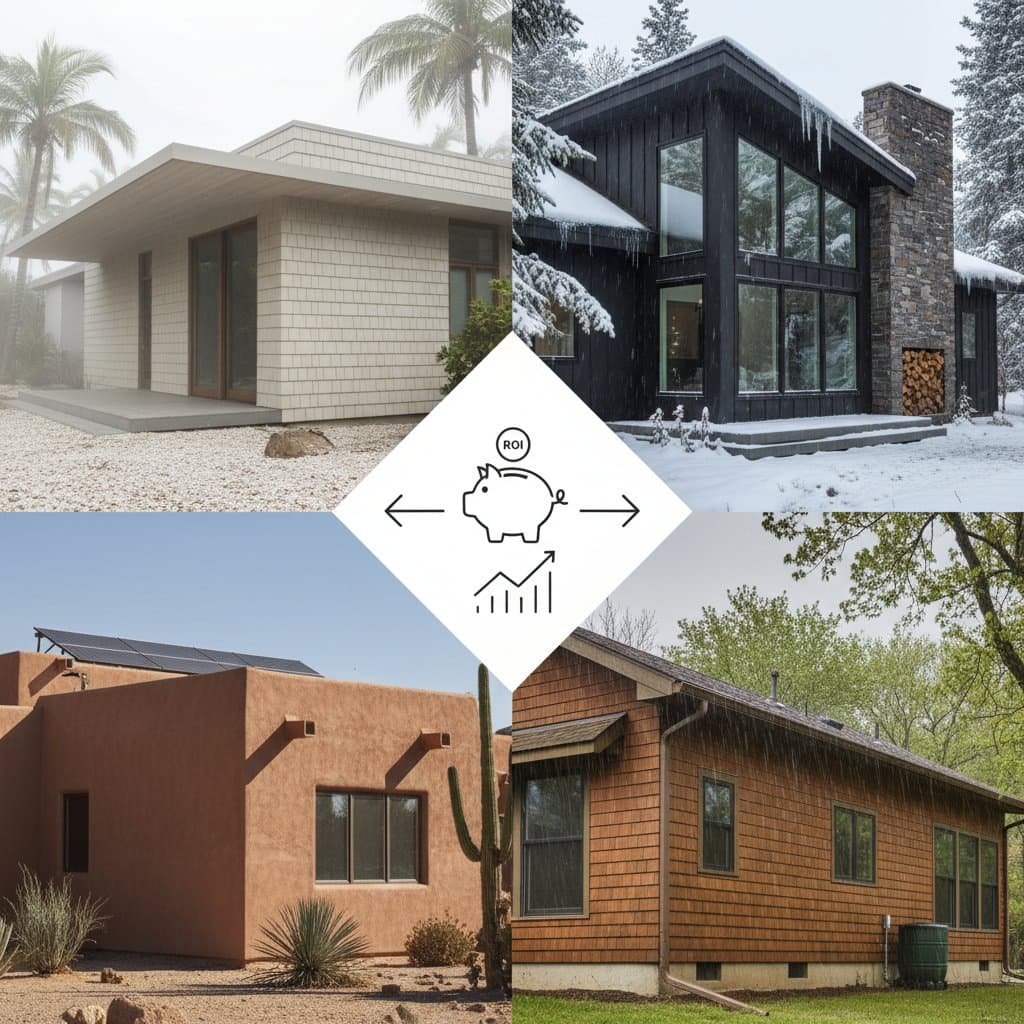
Climate Zones That Shift Your Siding ROI Most
Siding return on investment depends heavily on local climate. The same product that performs well in a mild region can lose value fast in a wet or high wind area. Homeowners comparing siding options need to balance upfront cost, durability, maintenance, and how the exterior will look and sell in their specific zone.
This guide breaks down how regional weather drives total cost of ownership and resale payback. It provides clear expectations for cost, care, and project scope across major climate zones.
Cost, ROI, and Impact Factors
Return on investment for siding replacement often lands between 60 and 85 percent of the project cost. The top range usually appears in climates where siding performance directly reduces ongoing maintenance or energy loss.
Cost drivers include removal and disposal of heavier materials or lead paint layers, which add 1 to 3 dollars per square foot. Complexity and height for two story homes or steep lots can add 10 to 20 percent. Trim and detailing such as wide corner boards raise labor hours. Access and site conditions on tight urban lots slow installation.
Scale examples show a compact ranch with vinyl siding and basic trim costs about 10,000 to 15,000 dollars. A two story colonial with fiber cement and full trim costs about 25,000 to 35,000 dollars. A custom home with mixed textures, stone accents, and complex corners costs about 40,000 to 60,000 dollars.
Match siding type to local weather stress before comparing price per foot. The lowest bid in the wrong climate usually costs more over time.
Design for Curb Appeal
Buyers judge siding fast from the street and from listing photos. Balanced proportion and color contrast drive perceived quality.
Key design principles include keeping massing simple and avoiding busy panel patterns on small elevations. Use contrast between body color and trim to frame windows and doors. Select mid tone colors for broad walls while saving dark or bright tones for entry features. Check undertones under daylight and shade to avoid mismatched warmth.
Entry emphasis matters. A well trimmed front door, updated house numbers, and balanced lighting add more perceived value than premium siding alone.
Spend design money where the camera focuses first, such as front elevations and entry trim, rather than on hidden side walls.
Maintenance and Longevity
Ongoing care protects ROI by extending repaint cycles and minimizing repairs.
Maintenance includes quarterly hosing of dirt and checking caulking near joints. Yearly inspections cover cracks, warping, or pest entry points. Repaint or restain every 3 to 5 years as finish wears. After storms check trim edges and fasteners for movement.
Use low pressure water and mild detergent only. Avoid abrasive brushes that can void finish warranties. Keep vegetation trimmed back at least six inches to allow drying.
Most siding warranties cover manufacturing defects, not installation or neglect. Keep records of cleaning and inspections to support claims. Routine cleaning and documentation build resale trust.
Performance Across Climate Zones
Coastal humid zones favor fiber cement or engineered wood with strong moisture barriers. These materials resist salt air and mold while maintaining structural integrity for 30 years or more. Vinyl performs adequately but requires frequent fastener checks due to wind exposure.
Cold winter zones benefit from insulated vinyl or fiber cement with proper expansion gaps. These options handle freeze thaw cycles without cracking and reduce heating costs. Wood siding needs annual sealing to prevent ice damage.
Hot arid zones suit stucco or light colored fiber cement that reflects heat. These materials limit expansion and fading. Darker vinyl options can warp under intense sun and lower long term value.
Mixed climate areas require hybrid approaches such as fiber cement on south facing walls and insulated vinyl on protected sides. Proper flashing at transitions prevents water intrusion regardless of zone.
Contractor Selection and Bidding
A strong contract protects cost and quality. Never accept a lump sum quote without material details. Request itemized bids that list product brand, thickness, and warranty terms. Verify installer experience with your specific climate challenges through recent local references.
Protecting Long Term Value
Select materials proven in your zone and follow a consistent maintenance schedule. This approach maximizes resale appeal and minimizes unexpected expenses. Homeowners who align siding choices with regional demands see stronger returns and fewer repairs over the life of the home.