
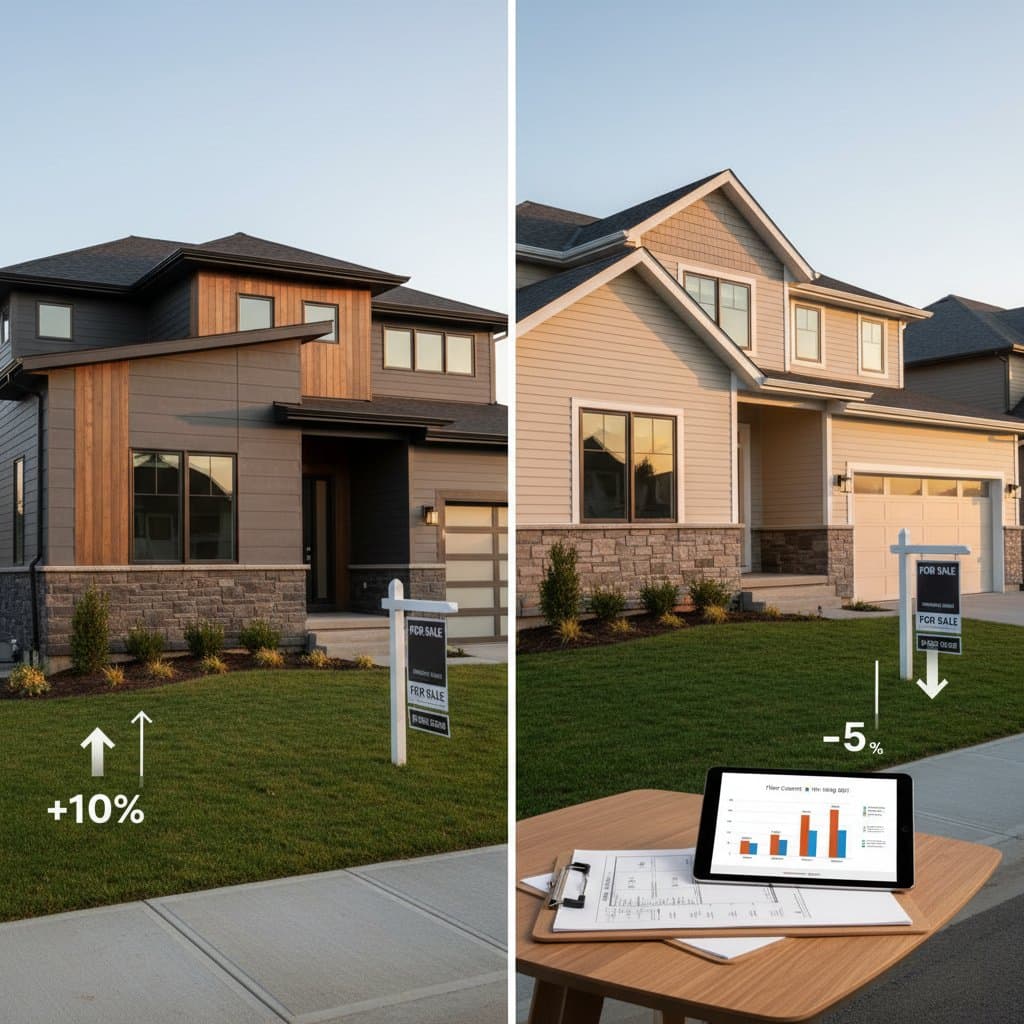
Fiber Cement Returns 5-15% More at Resale Than Vinyl
Fiber Cement vs Vinyl: 2025 Resale Value Showdown
Homeowners planning exterior updates frequently inquire about the siding option that maximizes resale value. Fiber cement and vinyl dominate the market due to their balance of affordability and durability, but they diverge in initial costs, visual appeal, and enduring worth. The optimal selection hinges on financial constraints, local architectural norms, and anticipated tenure in the property. This analysis details the influence of each material on resale outcomes, upkeep requirements, and overall expenses to facilitate informed choices.
Cost, ROI, and Impact Factors
Resale value emerges from tangible returns on investment alongside buyer perceptions of quality. Research indicates that prospective buyers favor pristine, even siding surfaces paired with precise trim alignments. Vinyl siding generally recoups 60 to 70 percent of installation expenses upon sale, whereas fiber cement achieves 65 to 75 percent. Within upscale communities, fiber cement often attains the upper end of this spectrum by emulating the texture and finish of painted wood, thereby conveying superior build quality.
Key Cost Drivers
Several elements drive installation expenses for both materials.
- Removal and disposal: Fiber cement, being denser, elevates labor demands and disposal charges compared to lighter vinyl.
- Complexity: Features such as gables, dormers, or multi-level structures necessitate additional equipment like ladders and scaffolding, inflating costs.
- Trim scope: Expansive corner boards or bespoke window casings increase both material quantities and installation time.
- Access: Confined property boundaries or restricted parking areas complicate site preparation and debris management, adding to the total.
Scale Examples
Costs vary by project size and material choice. Consider these benchmarks for 2025 pricing in moderate climates.
- Small project: A 1,200-square-foot single-story ranch requires vinyl siding at approximately $7,000 to $9,000, including basic trim and labor.
- Mid-scale: For a 2,000-square-foot two-story residence, fiber cement installation ranges from $16,000 to $22,000, factoring in standard accessories.
- Large project: Properties exceeding 3,000 square feet with comprehensive fiber cement and custom trim may surpass $30,000.
To calculate a personalized estimate, measure your home's exterior square footage, add 10 to 15 percent for waste and overlaps, then multiply by current regional rates per square foot—typically $4 to $6 for vinyl and $8 to $12 for fiber cement.
Vinyl suits scenarios with brief ownership periods or limited funds, delivering quick enhancements without excessive outlay. Fiber cement, however, bolsters sustained appreciation and aligns with elevated buyer expectations in premium markets.
Design for Curb Appeal
Siding upgrades profoundly alter a home's street-level presence. Potential buyers first assess overall proportions, color harmonies, and focal points like entrances, often overlooking finer material traits.
Key Design Rules
Apply these principles to amplify visual impact.
- Massing and proportion: Maintain uniform horizontal lap lines across the facade. Employ broader trim profiles to anchor the silhouette of vertically oriented homes.
- Contrast: Combine medium-toned siding with lighter trim to accentuate architectural forms. Reserve bold dark hues for roofs that provide sufficient counterbalance.
- Color depth: Fiber cement accommodates rich, low-sheen paints that render attractively in photographs and natural light. Vinyl options maintain consistent pigmentation but may appear more vivid in direct sun.
- Entry emphasis: Ensure seamless material transitions, install contemporary numerals, and incorporate symmetrical fixtures to foster an upscale vibe.
Beyond basics, consult local trends—such as shaker-style panels in colonial areas or board-and-batten in modern settings—to harmonize with surroundings. Professional renderings or samples displayed on-site during planning can preview outcomes and refine selections.
Effective design elevates any material's worth. Even vinyl, when proportioned thoughtfully, can surpass fiber cement marred by suboptimal execution.
Maintenance and Longevity
Preserving siding integrity demands routine oversight for both options to safeguard investment.
Cleaning and Care
Establish simple protocols to extend service life.
- Vinyl: Perform annual cleaning using a gentle soap solution and soft-bristle brush. Steer clear of pressure washers, which risk driving moisture beneath panels and promoting mold.
- Fiber Cement: Hose down surfaces biannually to remove debris. Address chalking or fading by repainting affected areas promptly.
Inspection Intervals
Schedule checks to preempt deterioration.
- Every 2 years: Examine sealant integrity around windows, doors, and trim edges for cracks or separation.
- Every 5 years: Review expansion joints for shifts or voids that could invite water intrusion.
- Every 10 to 15 years: Evaluate fiber cement for full recoating needs, using high-quality exterior latex paints.
Maintenance Checklist
Incorporate these habits into property care routines.
- Trim back plants and shrubs to maintain at least 12 inches of clearance from exterior walls.
- Regularly clear gutters and downspouts to avert water pooling and soil erosion at foundations.
- Swap out any fractured or warped trim sections without delay to uphold uniformity.
- Document all maintenance activities, including cleaning dates and paint applications, to present during home sales.
Consistent upkeep ensures siding retains sharpness and averts minor flaws from eroding market appeal. For fiber cement, its inherent resistance to fire, pests, and impact further enhances longevity over vinyl in demanding environments.
Choosing Siding for Lasting Home Value
Vinyl provides reliable, effortless operation ideal for owners anticipating sales within five to ten years. Its appeal lies in minimal intervention and accessible pricing, though it carries less cachet among discerning purchasers. Fiber cement demands greater initial commitment but rewards with connotations of artisanal detail, enhanced safety features, and robust performance. In locales featuring elevated median prices, this distinction translates directly to superior offers.
Select fiber cement to cultivate enduring curb appeal and structural assurance that appeals to long-term buyers. Opt for vinyl when immediate affordability and swift aesthetic improvements take priority, ensuring a viable path to profitability regardless of timeline.