
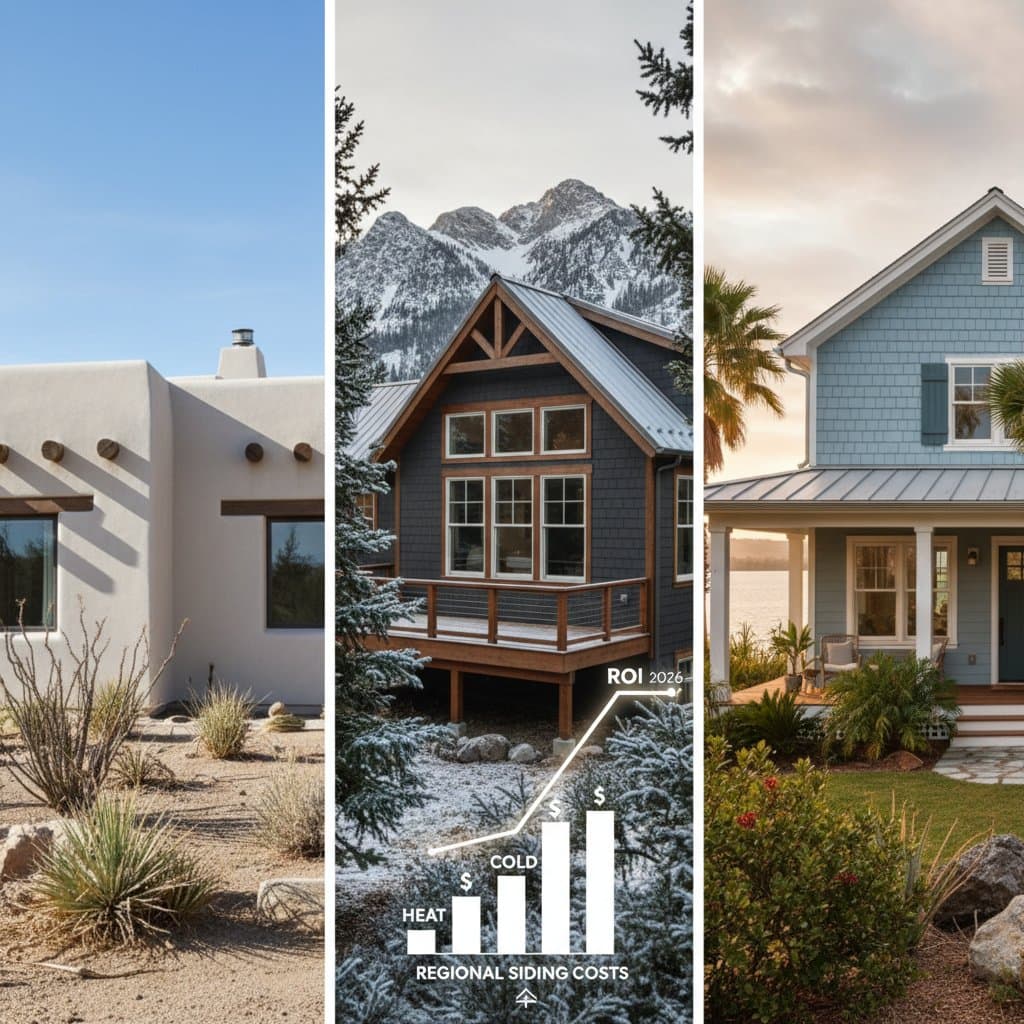
Choosing Siding That Matches Your Climate for Maximum Return
Every homeowner seeks siding that enhances appearance, withstands local weather, and supports strong resale value. The optimal selection aligns with regional climate patterns, home orientation, and acceptable maintenance levels. Materials that perform well in humid coastal zones often differ from those suited to freezing winters or arid heat.
This guide outlines material comparisons, cost considerations, and installation planning steps. Readers gain practical methods to evaluate options and protect long-term investment.
Core Siding Profiles and Material Choices
Available Profiles
- Lap siding consists of horizontal boards that overlap and suits most architectural styles.
- Board and batten features vertical panels with narrow strips covering seams and works effectively on farmhouses or contemporary structures.
- Shake or shingle uses irregular pieces of wood or fiber cement and appears frequently on gables or accent areas.
- Panel systems employ large metal or composite sheets to create clean, modern surfaces.
Material Comparison
| Material | Advantages | Disadvantages | Typical ROI |
|---|---|---|---|
| Vinyl | Low initial cost, no painting required, broad color selection | Prone to cracking in extreme cold, can warp under intense heat | 70-75% |
| Fiber Cement | Fire resistant, dimensionally stable, realistic wood appearance | Heavier weight, requires repainting every 10 to 15 years | 80-85% |
| Engineered Wood | Lighter than fiber cement, incorporates renewable fibers | Needs periodic sealing, susceptible to damage if protective coating fails | 75-80% |
| Metal (steel or aluminum) | Fully recyclable, highly durable, resistant to insects | Higher upfront cost, surface may dent from impact | 65-75% |
| Natural Wood | Attractive warmth, straightforward local repairs | Demands frequent upkeep, elevated fire risk in dry regions | 60-70% |
Guidelines for Combining Materials
Select one primary field material and limit accents to a single complementary option. Place transitions at natural architectural breaks such as floor lines or gable ends. Match trim widths to window proportions. Excessive texture variety reduces visual coherence and may create waterproofing complications.
Climate-Specific Recommendations
Cold climates benefit from fiber cement or insulated vinyl to limit heat loss. Coastal locations perform best with metal or PVC-based products that resist salt corrosion and moisture. Hot, dry zones require engineered wood finished with UV-stable coatings to prevent fading. Humid subtropical areas gain from vinyl installed over ventilated rain screen backing that promotes drainage.
Project Preparation Steps
Define Objectives and Scope
Identify priorities such as improved insulation, refreshed appearance, or lower maintenance demands. Measure total wall area and document existing issues including rot or peeling paint.
Select Qualified Contractors
Interview at least three installers experienced with the chosen material. Confirm that each carries liability and workers compensation insurance. Request recent references from projects completed in the same area.
Evaluate Proposals
Obtain detailed bids that specify material brands, thicknesses, flashing types, and finish systems. Compare warranty coverage directly. Reject proposals that rely on vague lump-sum pricing without itemization.
Review Samples and Test Installations
Request full-size samples to assess color under natural daylight. Many homeowners construct a small test section to verify seam alignment and trim fit before committing to complete coverage.
Prepare the Work Site
Clear driveways and relocate outdoor furniture. Confirm availability of electrical outlets for power tools. Arrange for waste containers and establish daily cleanup routes.
Conduct Installation Inspections
Verify complete underlayment coverage. Confirm that starter strips remain level. Check that fastener spacing follows manufacturer specifications. Document conditions with photographs before final wrap application.
Complete Final Review
Inspect all caulking, paint touch-ups, and flashing terminations. Maintain a written punch list and secure confirmation for any required follow-up visits.
Ongoing Maintenance for Sustained Value
Annual cleaning, joint inspections, and gutter clearing preserve siding performance. Repaint or reseal surfaces according to manufacturer schedules. Prompt attention to minor issues prevents substrate damage and supports continued energy efficiency.
Fiber cement frequently delivers leading returns in mixed and cold climates. Vinyl maintains strong performance in mild regions. Engineered wood fits areas with moderate humidity. Metal excels where fire and wind loads present primary concerns.
Selecting climate-appropriate siding together with professional installation and consistent care safeguards both property condition and financial return over many years.