
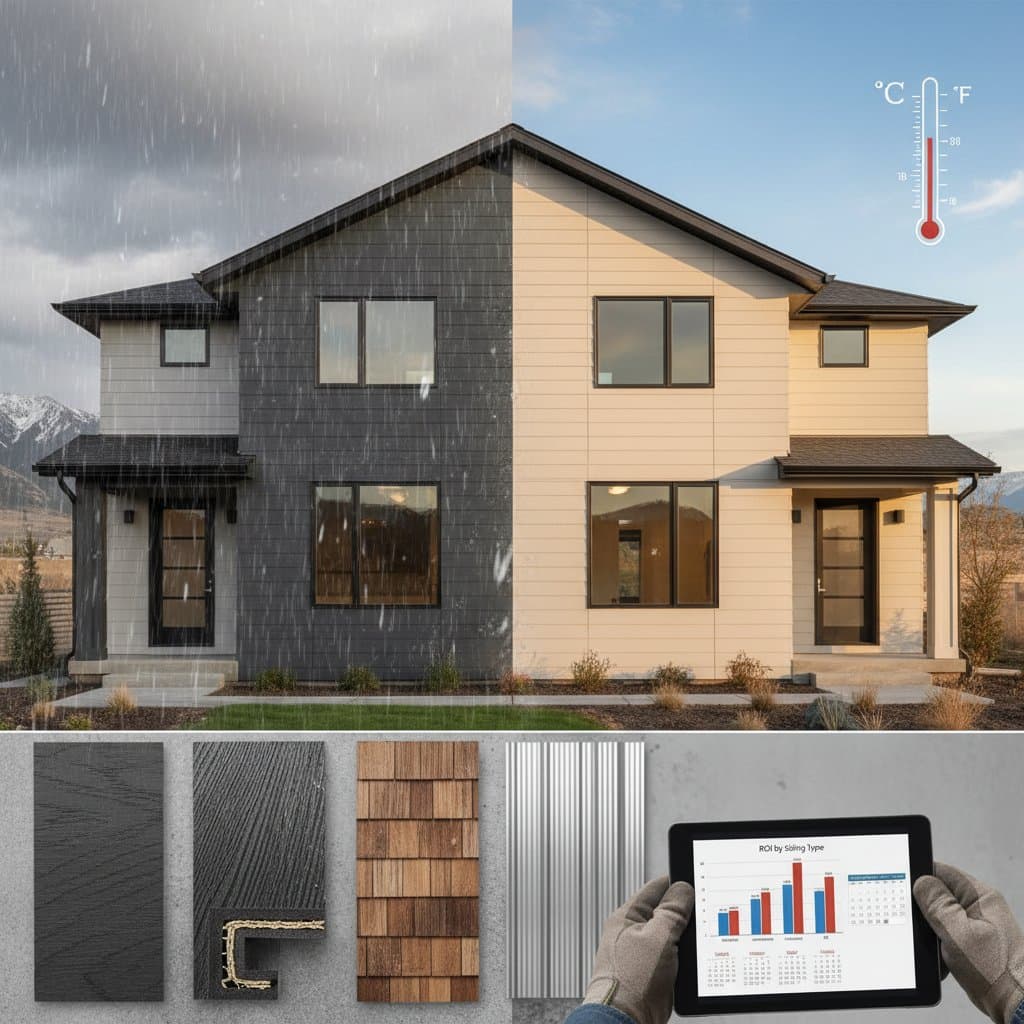
Understanding Siding's Role in Climate Resilience
Homeowners frequently overlook the profound impact of siding selection on daily comfort, ongoing expenses, and market value. The chosen material must endure regional variations in temperature, precipitation, and sunlight intensity. It also requires the ability to maintain visual appeal and structural integrity over extended periods. Optimal siding stabilizes indoor temperatures, averts water intrusion, and enhances exterior aesthetics to attract potential buyers. This guide examines strategies for selecting siding suited to diverse climates, estimates associated costs, and identifies factors that secure enduring performance.
Evaluating Materials and Profiles for Climate Demands
Various climates demand specific material attributes. No universal solution excels in every environment, which necessitates weighing durability against aesthetics and upkeep requirements.
| Material | Pros | Cons | Ideal Climates |
|---|---|---|---|
| Vinyl | Cost-effective, retains color, minimal upkeep | Becomes brittle in severe cold, distorts in intense heat | Mild to moderate temperatures |
| Fiber Cement | Resists fire, dimensional stability, wood-like appearance | Substantial weight, requires repainting every 10 to 15 years | Humid or fire-risk areas |
| Engineered Wood | Authentic wood aesthetic, pre-applied moisture-resistant finish | Demands precise sealing at edges | Variable weather conditions |
| Metal (Steel or Aluminum) | Non-flammable, robust, environmentally recyclable | Prone to dents, potential color fading | Coastal or wildfire-prone regions |
| Stucco or EIFS | Superior thermal insulation, seamless surface | Susceptible to cracking with subpar application | Arid or moderate environments |
In fire-vulnerable areas, materials with high resistance ratings prove essential. Coastal and humid locations prioritize options that repel moisture effectively. Both fiber cement and metal achieve Class A fire ratings, offering reliable protection. Vinyl and wood products perform adequately when paired with appropriate underlayments and ventilation gaps. For regions with fluctuating conditions, engineered wood featuring polymer treatments resists expansion from humidity and contraction from dryness.
Consider local weather patterns when reviewing product specifications. Vinyl siding, for instance, thrives in temperate zones with average annual rainfall below 40 inches, where temperatures rarely dip below freezing or exceed 100 degrees Fahrenheit. Fiber cement excels in hurricane-prone areas, withstanding winds up to 150 miles per hour when properly fastened. Metal options suit salty air environments, as their corrosion-resistant coatings prevent rust formation over 30 years or more.
Actionable Takeaway:
Align siding specifications with your area's building codes. Request documentation on moisture permeability, fire endurance, and impact resistance from suppliers prior to purchase.
Ensuring Installation Excellence to Mitigate Risks
Superior materials yield poor results without meticulous installation techniques. The exterior wall system must direct water away, allow vapor escape, and secure against high winds. Critical vulnerabilities arise at windows, doors, corners, and base edges.
- Install a seamless weather-resistive barrier across all exterior surfaces.
- Apply self-adhering flashing membranes around penetrations, supplementing with durable sealants.
- Establish adequate gaps from ground level and roof edges to prevent capillary action.
- Secure fasteners at manufacturer-recommended intervals to minimize warping or detachment.
- Verify compliance with regional wind resistance standards, such as those for gusts exceeding 90 miles per hour.
Professional crews maintain orderly work sites by removing debris daily, protecting nearby vegetation, and coordinating with neighbors to minimize disruptions. Such practices not only ensure quality but also foster positive community relations.
In practice, improper flashing at window sills leads to 70 percent of water-related claims in rainy climates. Proper ventilation behind siding reduces mold growth by 50 percent in humid areas, extending the material's lifespan.
Actionable Takeaway:
Conduct a thorough review of underlayments and flashings prior to enclosing them with siding panels. Remediation after coverage escalates costs significantly, often by a factor of five.
Choosing Reliable Contractors Through Detailed Bidding
A comprehensive bid clarifies project boundaries and averts misunderstandings. Proposals must enumerate all components, from core materials to ancillary services.
Essential Bid Components Checklist
- Specify material variety, profile dimensions, and panel thickness.
- Detail weather barriers, insulation layers, and vapor retarders.
- Outline trim elements, soffit integrations, and accessory hardware.
- Describe surface treatments, including paints or inherent finishes.
- Include provisions for waste management, site safeguarding, and cleanup.
- Schedule permit procurement, inspections, and milestone completions.
Seek contractors with certifications from organizations like the Vinyl Siding Institute or Fiber Cement Council. Review portfolios of similar climate-specific projects and obtain references from recent clients in comparable environments. Bids should provide cost breakdowns: materials typically account for 40 percent, labor 50 percent, and overhead 10 percent. For a 2,000-square-foot home, expect vinyl installations at $8,000 to $15,000, fiber cement at $15,000 to $25,000, and metal at $12,000 to $20,000, varying by region and complexity.
Compare at least three bids, focusing on warranties—aim for 30-year transferable coverage on materials and 10-year workmanship guarantees. Discuss contingency plans for weather delays, which can add 10 to 20 percent to timelines in stormy seasons.
Realizing Lasting Value from Your Siding Decision
Investing in resilient siding delivers returns via reduced upkeep demands, consistent indoor climates, and elevated property worth. The ideal selection harmonizes with local conditions and your capacity for periodic care. Humid locales emphasize robust moisture management and airflow systems. Arid or fire-threatened regions benefit from non-combustible compositions that provide security.
Evaluate ownership costs holistically, beyond initial outlays. Fiber cement installations, though pricier upfront, endure 50 years with biennial cleaning, compared to vinyl's 20 to 40 years requiring occasional panel replacements. Resale analyses indicate durable siding boosts home values by 5 to 7 percent in climate-challenged markets. Regular inspections—annually for coastal homes, biennially elsewhere—preserve performance and avert minor issues from escalating.
Ultimately, thoughtful siding choices fortify your home against environmental stresses, ensuring comfort, efficiency, and appeal for generations.