
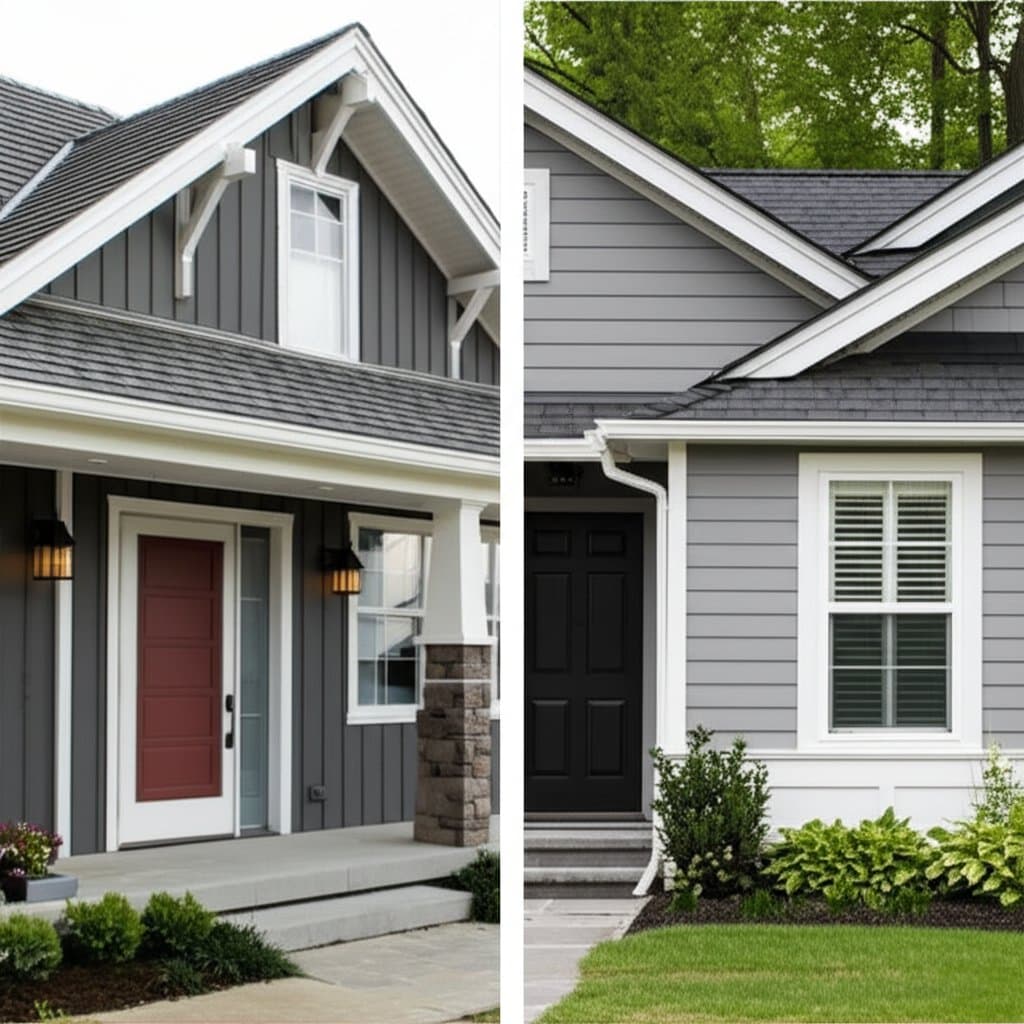
Fiber Cement's Advantages Over Vinyl Siding in 2025
Homeowners frequently evaluate fiber cement and vinyl siding options during exterior renovation projects. Each material offers reduced maintenance and extended service life, yet they diverge significantly in practical performance, expense patterns, and aesthetic qualities. This overview examines these distinctions to support precise budgeting and selection of an enduring exterior solution for residences.
Fiber cement stands out for its robustness against environmental stresses, while vinyl provides affordability and simplicity. Understanding these traits enables informed choices that align with specific home needs and regional conditions. The following sections detail style variations, preparation steps, and long-term considerations.
Exploring Styles and Material Choices
Siding Profiles
Popular configurations encompass lap, shingle, and vertical board designs. Fiber cement replicates wood textures with remarkable fidelity, whereas vinyl typically presents a more uniform surface. In traditional architecture, fiber cement lap siding achieves a substantial, wood-like finish when painted. Vinyl fits contemporary or cost-sensitive endeavors that prioritize rapid application and consistent coloration.
Core Material Properties
Fiber cement consists of Portland cement, sand, and cellulose fibers blended into a durable composite. This formulation withstands fire, insect damage, and decay effectively. Finishes, whether painted or factory-applied, endure up to 15 years prior to recoating needs.
Vinyl derives from polyvinyl chloride (PVC), a polymer that eliminates painting requirements and repels moisture well. However, it risks cracking from impacts or warping in proximity to heat sources, limiting its versatility in varied climates.
Combining Materials for Balance
Integrating fiber cement and vinyl allows optimization of expenses and aesthetics. Property owners often apply fiber cement to prominent front elevations for visual impact, reserving vinyl for rear or side areas with lower visibility. Maintaining uniform trim hues prevents discordant appearances across the facade.
Trim and Accent Elements
Fiber cement trim boards bolster corners, windows, and doors with precise, sturdy framing. Vinyl employs extruded channels for trim, which may appear narrower and less substantial. Designs requiring expansive casings or pronounced shadow lines benefit from fiber cement's adaptable profiles, enhancing architectural details.
Practical Application Examples
Consider a two-story colonial residence: Fiber cement lap siding in a smooth texture, paired with broad trim, evokes a classic painted-wood exterior.
For a single-level ranch-style home, vinyl panels deliver swift coverage and effortless upkeep, ideal for expansive flat surfaces.
In a seaside cottage setting, fiber cement shingles provide essential weatherproofing alongside genuine, tactile surfaces that complement coastal motifs.
These examples illustrate how material selection influences both form and function, tailored to architectural style and site demands.
Costs and Durability Comparison
Initial installation costs for fiber cement range from $8 to $14 per square foot, including labor, compared to vinyl's $4 to $8 per square foot. This premium reflects fiber cement's heavier composition and specialized handling, yet it translates to fewer repairs over time.
Durability metrics favor fiber cement: It resists fading, chalking, and warping better than vinyl, maintaining integrity through temperature extremes and high winds. Fire ratings classify fiber cement as non-combustible, a critical advantage in wildfire-prone regions, while vinyl achieves limited flame spread resistance.
Maintenance differs markedly. Vinyl requires occasional cleaning with mild soap to prevent mildew, but fiber cement demands periodic inspections for caulking integrity and repainting every 10 to 15 years. These efforts preserve its protective qualities and visual allure.
Long-term value emerges in resale potential. Homes with fiber cement siding often command 5 to 10 percent higher market prices due to perceived quality and energy efficiency from its insulating properties.
Preparing for Your Siding Installation
Thorough preparation ensures a seamless project execution and optimal results. Follow these structured steps to minimize disruptions and maximize satisfaction.
-
Establish Project Objectives and Extent. Determine if the work involves full replacement or targeted repairs on deteriorated areas. Document requirements for trim, soffits, and any painting to create a comprehensive plan.
-
Identify Qualified Contractors. Seek professionals certified by the siding manufacturer to guarantee adherence to installation standards and warranty terms.
-
Evaluate Multiple Quotes. Scrutinize proposals for specifics on demolition, waste removal, weatherproofing flashes, and surface preparation. Inquire about equipment like scaffolding and measures for protecting landscapes and structures.
-
Test Materials On-Site. Request color samples or installed mockups to assess textures, finishes, and light interactions under natural conditions.
-
Prepare the Property. Remove vegetation within three feet of exterior walls, relocate patio items, and verify electrical outlets for tools.
-
Plan for Installation Disruptions. Anticipate elevated noise levels, dust generation, and access limitations around work zones. Secure pets indoors and protect indoor furnishings from debris.
-
Conduct Final Inspections. Verify straight panel lines, thorough caulking, and even paint application prior to approving payment and closing the project.
Adhering to this sequence streamlines the process, from initial planning through completion, fostering a professional outcome.
Maximizing Longevity and Appeal
Fiber cement siding involves greater initial investment yet yields decades of reliable service, enhanced fire safety, and a premium tactile presence unmatched by vinyl. Vinyl serves as an efficient, economical choice for straightforward, low-upkeep exteriors, though its endurance and thermal stability fall short in demanding scenarios.
Individuals intending prolonged occupancy or residing in severe weather zones find fiber cement the superior option. Proper installation, regular gentle cleaning, and scheduled repaints sustain its protective barrier and attractive facade well beyond vinyl's capabilities. This strategic choice elevates home resilience and equity over time.