
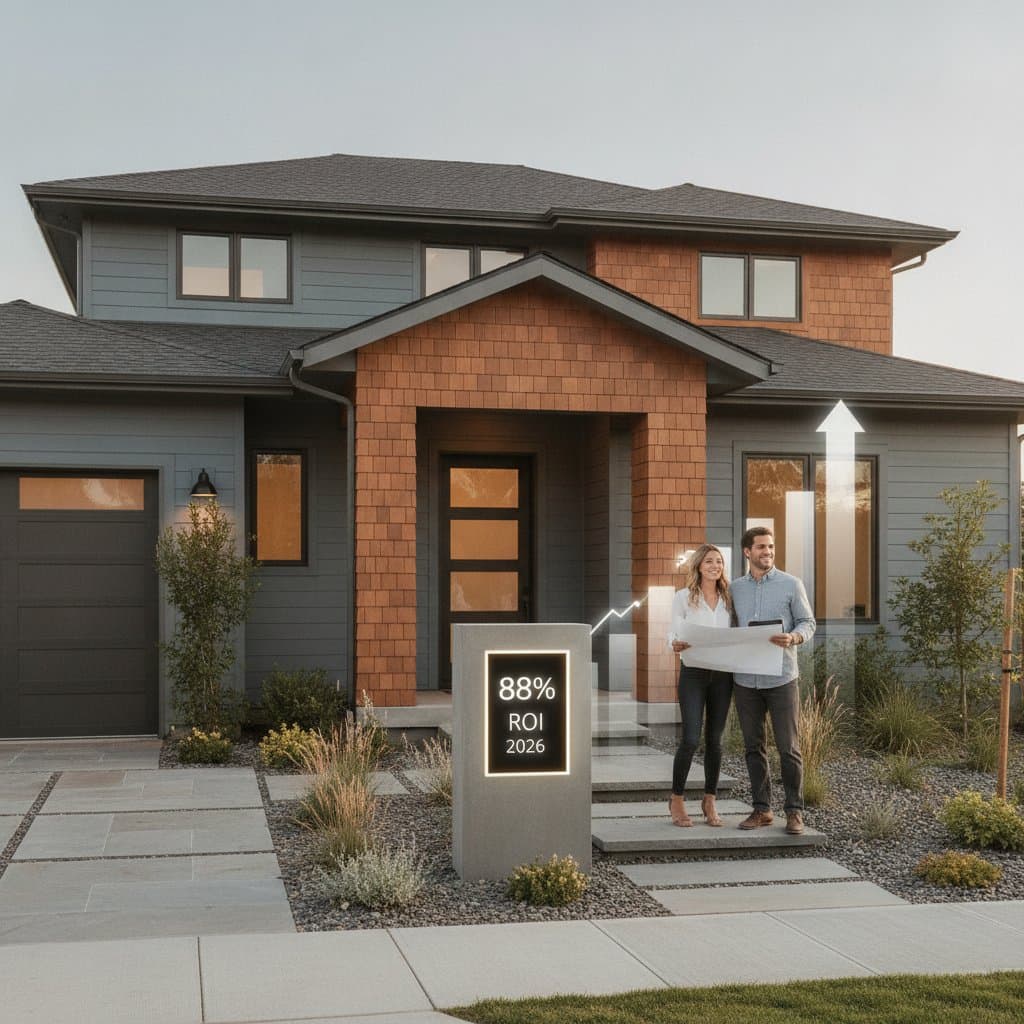
88% ROI on Fiber Cement Siding Replacement in 2026
A fiber cement siding replacement continues to rank near the top of exterior remodeling projects for return on investment. Homeowners report roughly an 88 percent cost recovery at resale. This performance makes the upgrade one of the most reliable options for improving both appearance and market value. The combination of curb appeal, durability, and low maintenance drives strong buyer interest while protecting long-term ownership costs.
This guide explains how that ROI is achieved. It also covers what drives project pricing and how to plan a fiber cement siding replacement that meets budget, durability, and design goals.
Cost, ROI, and Impact Factors
A fiber cement siding replacement delivers about 88 percent of its cost back at resale. The return comes mainly through improved exterior appearance and reduced ongoing maintenance. The project often performs better in markets where buyers prioritize clean finishes and long service life over short-term savings.
Cost Drivers
- Removal of old siding adds 1 to 3 dollars per square foot. Hazardous materials or multiple layers raise costs further.
- Two-story homes require more staging and safety gear, often adding 15 to 25 percent.
- Corners, soffits, and window casings influence both labor time and material waste.
- Tight property lines, steep grades, or landscaping obstacles slow production.
- Skilled crews familiar with fiber cement installation command higher rates but reduce future callbacks.
Scale Examples
- Small project covers 1,000 square feet on a single story with limited trim for roughly 14,000 to 18,000 dollars.
- Mid project covers 2,000 square feet with moderate trim for roughly 26,000 to 34,000 dollars.
- Large project covers 3,000 square feet or more with complex elevations for 38,000 dollars and above.
The 88 percent ROI assumes complete replacement with quality installation and neutral color selection. Partial replacements or patch jobs deliver lower returns due to inconsistent appearance.
Design for Curb Appeal
A siding upgrade reshapes how a home reads from the street. Buyers notice proportion, color depth, and entry definition first. Balanced design improves both perceived value and photo performance on listings.
Practical Design Rules
- Keep horizontal lines consistent across each wall plane.
- Choose trim and siding colors with at least 30 percent contrast for clean edges.
- Select mid-tone shades in gray, taupe, or desaturated green to maintain appeal over time.
- Use smooth panels or vertical accents near the front door for subtle focus.
- Install warm white fixtures and legible house numbers for a finished look.
Curb appeal drives the perceived quality of the entire property. Even neutral design choices raise buyer confidence when execution looks deliberate and consistent.
Maintenance and Longevity
Fiber cement siding requires less upkeep than wood or engineered wood. It still benefits from routine inspection and cleaning. Consistent maintenance preserves finish warranty coverage and resale value.
Maintenance Checklist
| Task | Frequency | Method |
|---|---|---|
| Wash siding | Once per year | Low-pressure rinse with mild detergent |
| Inspect caulked joints | Twice per year | Replace cracked or missing sealant |
| Check paint or finish | Every 5 to 10 years | Recoat if fading or peeling |
| Clear vegetation | Ongoing | Keep 6 inches away from walls |
| Inspect flashing and drip edges | Annually | Ensure water runs off cleanly |
Avoid high-pressure washing or abrasive pads. These can strip paint and expose the substrate. When repainting, use 100 percent acrylic coatings for maximum adhesion.
Minimal but consistent care ensures fiber cement maintains its clean appearance and supports the long-term ROI.
Selecting Materials and Professionals
Quality materials and experienced installers protect the projected return. Specify primed boards from established manufacturers. Confirm that crews follow manufacturer fastening schedules and flashing details. Request references from recent local projects before signing a contract. These steps reduce the chance of callbacks that erode both budget and buyer confidence at resale.