
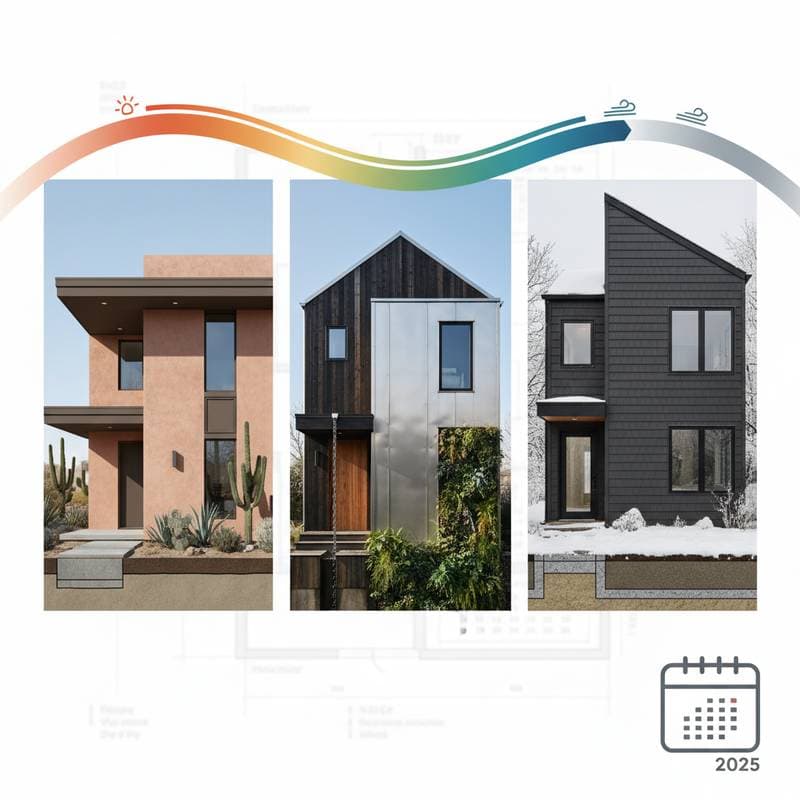
Why Climate Shapes Your Ideal Siding in 2025
Home exteriors face unique local weather challenges. The optimal siding selection hinges on environmental demands rather than aesthetics alone. Materials that endure for decades in arid, cool areas may deteriorate quickly in humid, coastal environments. Knowledge of how temperature, humidity, sunlight, and wind influence various siding types enables informed decisions for long-term durability and value.
Siding serves dual purposes: protection from elements and enhancement of curb appeal. Climate primarily dictates protective performance, while personal preferences guide visual aspects. Aligning these factors ensures both functionality and aesthetic satisfaction.
Understanding Siding Profiles and Materials
Siding profiles vary in design and suitability for different conditions. Each type offers specific benefits in water shedding, wind resistance, and visual texture.
Key Siding Profiles
- Lap siding: Horizontal boards overlap to direct water away from the structure. This profile performs reliably across diverse climates with proper installation.
- Board and batten: Vertical planks feature narrow battens over seams for a rustic appearance. It suits dry or moderate climates where moisture accumulation remains low.
- Shingle or shake siding: Textured panels mimic natural wood for added depth. In wet areas, require robust sealing to prevent water infiltration.
- Panel systems: Large sheets in metal or fiber cement provide sleek, contemporary lines. These excel in high-wind regions due to enhanced structural integrity.
Material Breakdown
Selecting the right material involves balancing cost, maintenance, and environmental compatibility. The following table outlines primary options, their advantages, drawbacks, and ideal applications.
| Material | Pros | Cons | Best Climate |
|---|---|---|---|
| Vinyl | Affordable, minimal upkeep, extensive color variety | Prone to cracking in extreme cold, potential warping in intense heat | Mild to moderate temperatures |
| Fiber cement | Resistant to fire and dimensional changes, accepts paint well | Heavier weight demands sturdy framing, initial painting required | Hot, humid, or wildfire-prone areas |
| Engineered wood | Authentic wood aesthetic, lighter installation | Periodic repainting necessary, susceptible to prolonged moisture | Cool, dry environments |
| Metal (steel or aluminum) | Exceptional longevity, impervious to pests, environmentally recyclable | Vulnerable to denting from impacts, colors may fade over time | Coastal zones or high-wind locations |
| Natural wood | Inviting natural warmth, straightforward repairs | Demands regular maintenance, elevated fire hazard | Arid or temperate regions |
Design and Installation Guidelines
Maintain a single dominant profile on primary walls to achieve cohesion. Introduce accent materials sparingly on gables or entryways for visual interest. Select trim colors that unify the overall palette. In precipitation-heavy areas, incorporate broader drip caps and fully sealed trim joints to manage runoff. For sun-exposed regions, opt for lighter hues that deflect heat and minimize thermal expansion.
Regional Application Examples
Tailor choices to specific locales for optimal results.
- Coastal cottage: Employ aluminum or fiber cement lap siding paired with corrosion-resistant stainless steel fasteners. These materials withstand salt corrosion and frequent moisture exposure.
- Mountain cabin: Select engineered wood with pre-applied protective coatings and a rain screen system. The air gap promotes ventilation and rapid drying after precipitation.
- Urban duplex: Install metal panels embedded with insulation layers. This setup enhances energy efficiency and meets stringent fire codes in dense settings.
- Suburban ranch home: Choose vinyl or insulated variants with seamless construction. Such designs effectively seal against drafts and reduce energy loss in variable winds.
Planning Your Siding Project Step by Step
Systematic preparation minimizes disruptions and ensures quality outcomes. Follow these stages to align your project with local climate realities.
- Establish objectives: Document prevailing climate challenges, desired aesthetics, and expected service life. Consider factors like annual rainfall, temperature extremes, and wind speeds.
- Vet contractors: Prioritize professionals familiar with regional weather impacts and building codes. Review portfolios for similar climate-adapted installations.
- Evaluate proposals: Ensure bids encompass identical specifications for underlayment, flashing, and trim work. Request breakdowns of material grades and labor hours.
- Examine samples: Assess color and texture samples under natural daylight conditions. Avoid relying on indoor lighting, which alters perceptions.
- Review mockups: Insist on a trial section installed on your property. This verifies alignment, finish quality, and integration with existing features.
- Site preparation: Relocate furnishings, prune vegetation, and arrange electrical access. Clear pathways to facilitate efficient material handling.
- Manage installation phase: Anticipate construction noise and restricted outdoor access. Secure pets and children in safe indoor areas during work hours.
- Conduct inspections: Verify proper placement of starter strips, corner reinforcements, and fastener intervals. Perform checks progressively to address issues promptly.
Maintaining Siding for Long-Term Performance
Installed siding acts as a resilient shield against environmental stresses. Regular care preserves its integrity and appearance. Clean surfaces periodically to remove debris, ensure adequate ventilation behind panels, and seal any gaps.
Monitor for emerging issues like minor fractures or loosened edges following seasonal transitions. Prompt repairs prevent water entry and structural compromise. In areas experiencing intensified weather patterns, such as increased rainfall or UV exposure, accelerate recoating schedules. Annual inspections and gentle cleaning routines safeguard the investment, often extending lifespan by years.
Essential Maintenance Practices
- Inspect seams and joints quarterly for signs of wear.
- Apply fresh sealant to vulnerable areas before winter sets in.
- Use soft brushes and mild cleaners to avoid surface damage.
Key Terms Defined
- WRB (Weather-Resistive Barrier): Protective sheathing installed behind siding to repel liquid water while permitting vapor transmission.
- Rain screen: Intentional airspace between the siding and underlying wall that facilitates water drainage and promotes airflow for drying.